
Full Lifecycle Cost Comparison: Reman Semi Trailers vs New Trailers vs Used Trailers
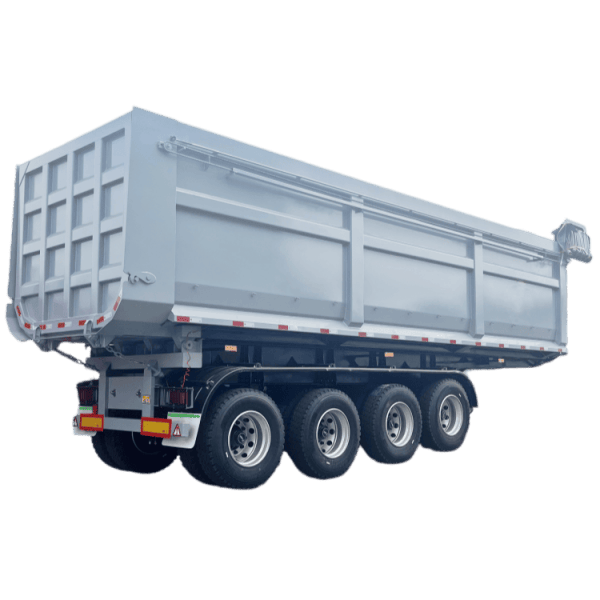
REMAN SEMI TRAILER VS NEW TRAILER VS USED TRAILER
For fleet managers and logistics operators, choosing between new, used semi trailers and reman semi trailers is never a simple price decision. Many buyers only compare upfront purchase costs while ignoring long-term depreciation, maintenance fees, downtime losses, and residual asset value. The true profitability of fleet assets depends on Total Cost of Ownership (TCO) across the full service lifecycle. This article delivers a detailed, industry-oriented cost comparison of three mainstream trailer solutions, clarifying their respective application scenarios, hidden cost risks, and long-term economic value.
TABLE OF CONTENTS
- Core Definition of Three Trailer Asset Types
- Upfront Purchase Cost Comparison
- Depreciation Cost Analysis (Key Hidden Loss)
- Maintenance & Repair Lifecycle Cost
- Downtime Loss Comparison (Most Valuable Hidden Benefit)
- Residual Value & Asset Exit Efficiency
- Comprehensive TCO Summary & Applicable Scenarios
- About REMAN ROAD: Brand Position, Vision & Core Operating Principles
RELATED ARTICLES | CLICK TO VIEW MORE
Core Definition of Three Trailer Asset Types
New Semi Trailers:
- Factory-manufactured zero-mile assets with full original specifications, complete manufacturer warranties, and the latest industry configurations.
- They represent the highest upfront investment with standardized quality and zero wear fatigue.
Used Semi Trailers:
- Second-hand trailers with unknown service history, residual wear, and accumulated metal fatigue.
- Sold in “as-is” condition with no standardized inspection, no component renewal, and no performance calibration.
Reman Semi Trailers:
- Industrially regenerated trailers based on qualified original chassis and structures.
- Through full disassembly, component grading, fatigue part renewal, system calibration and strict pre-delivery testing, reman trailers restore near-new performance.
- They follow unified industrial reman standards, completely different from casual refurbishment.
Upfront Purchase Cost Comparison
New Trailers — Highest Entry Cost
- Brand-new semi trailers require full factory production costs including raw materials, manufacturing, labor and brand premiums.
- They also involve additional taxes and longer lead times.
- Although quality and reliability are guaranteed, the huge one-time capital occupation severely restricts fleet cash flow and expansion speed.
Used Trailers — Lowest Short-Term Price
- Used trailers have the lowest upfront cost, with prices often 40%–60% lower than new units.
- They support immediate fleet capacity expansion with zero production waiting time.
- However, this low entry price is accompanied by unknown mechanical wear and hidden structural risks.
Remanufactured Trailers — Balanced Premium Cost
- Reman trailers are moderately priced, sitting perfectly between new and used options.
- Slightly higher than ordinary used trailers but far lower than new ones.
- The premium compared with used trailers entirely covers standardized industrial reman procedures, component renewal and quality testing, effectively eliminating hidden risks while controlling procurement budgets.
Depreciation Cost Analysis (Key Hidden Loss)
New Trailers — Severe Early Depreciation
- New trailers suffer the sharpest value decline in the first two to three years of operation.
- Once put into use, their market value drops rapidly, resulting in massive book asset losses for fleets.
- For project-based fleets with short and medium service cycles, new trailer depreciation losses are extremely uneconomical.
Used Trailers — Unstable Depreciation Curve
- Used trailers have completed the fastest depreciation stage, but their residual value is unstable.
- Due to unknown wear and no quality certification, secondary market recognition is low, leading to irregular value shrinkage and difficult asset realization.
Reman Semi Trailers — Gentle & Predictable Depreciation
- Certified reman trailers have the optimal depreciation curve.
- They avoid the steep initial depreciation of new trailers and enjoy stable residual value supported by complete reman documents and verified performance.
- The whole lifecycle asset loss is highly controllable, bringing the best asset preservation effect for fleets.
Maintenance & Repair Lifecycle Cost
New Trailers — Low Early Maintenance, Stable Operation
- New trailers have minimal failure rates within the warranty period, with only routine consumable replacement required.
- Long-term reliability is excellent, but after the warranty expires, major component maintenance costs gradually increase.
Used Trailers — Unpredictable High Hidden Costs
- Used trailers retain accumulated fatigue and aging parts.
- Their maintenance needs are random and unpredictable.
- Frequent sudden failures, structural looseness, brake system aging and electrical faults lead to continuous emergency repair costs.
- For long-haul and high-frequency fleets, late-stage maintenance expenditure often far exceeds the saved purchase cost.
Remanufactured Trailers — Fixed & Low Maintenance Costs
- During the remanufacturing process, all fatigue-limited components and aging vulnerable parts are 100% renewed.
- The whole vehicle resets the wear cycle with standardized performance.
- Fleets can formulate fixed preventive maintenance plans, completely avoiding sudden emergency repairs.
- Long-term maintenance costs are stable and controllable, far lower than used trailers.
Downtime Loss Comparison (Most Valuable Hidden Benefit)
New Trailers — Near-Zero Downtime Risk
- New trailers have stable performance and factory warranty support, with extremely low failure probability and minimal operational interruption.
Used Trailers — Highest Downtime Risk
- Hidden structural defects and aging components easily cause sudden breakdowns during peak transportation tasks.
- Remote road failures lead to long waiting times for rescue and repairs, bringing huge invisible economic losses to fleets.
Reman Trailers — Near-New Operational Stability
- All potential faults are eliminated in the factory through disassembly inspection and component renewal.
- Reman trailers achieve near-new operational stability, effectively reducing unplanned downtime and ensuring continuous fleet transportation capacity.
Residual Value & Asset Exit Efficiency
New Trailers — High Final Residual Value but Large Overall Depreciation
- New trailers retain high market value after years of use, but the total depreciation loss in the early stage is too large, resulting in low comprehensive return.
Used Trailers — Low Liquidity & Uncertain Residual Value
- Due to lack of quality proof and unclear service history, used trailers face difficult resale and low market recognition, with severely discounted residual value.
Remanufactured Trailers — Best Comprehensive Asset Performance
- With complete remanufacturing inspection files and traceable quality records, reman trailers have high secondary market recognition.
- They enjoy stable residual value and flexible asset turnover, perfectly matching project-based fleet cycle management.
Comprehensive TCO Summary & Applicable Scenarios
New Semi Trailers — Best for Long-Term Fixed Fleets
- Suitable for large-scale fleets with long-term stable projects, sufficient cash flow, and zero-risk operational requirements. Ideal for enterprises pursuing ultimate stability and long-term asset layout.
Used Semi Trailers — Only for Short-Term Temporary Tasks
- Only applicable for ultra-short-term temporary capacity supplementation.
- Not recommended for formal fleet long-term operation due to uncontrollable maintenance costs and downtime risks.
Remanufactured Semi Trailers — Best Cost-Performance for Most Fleets
- Reman semi trailers fill the market gap between new and used assets.
- They balance low upfront investment, controllable maintenance costs, low downtime risk and stable residual value.
- Perfect for medium and long-term project fleets, fleet capacity expansion, and cost-controlled standardized asset management.
About REMAN ROAD: Brand Position, Vision & Core Operating Principles
Understand REMAN ROAD’s brand positioning, long-term industry vision and unchanging core standards that separate us from ordinary refurbished workshops.
Core Brand Positioning: Trusted Middle Link For Heavy-Duty Reman Assets
We aim to become the global trusted credibility channel for heavy asset remanufacturing. Our core value lies in linking suppliers and worldwide mining & logistics fleets with unified quality supervision and transparent standards, instead of positioning ourselves as a single production workshop.
Long-Term Brand Vision
To standardize the disordered heavy-duty reman market globally via reliable credibility channels, eliminate low-quality superficial rebuild chaos, and provide risk-free, cost-effective heavy transport asset trading channels for all international contractors.
Three Core Operating Principles
We uphold full transparency of all reman records, unified global quality control standards, and long-term win-win partnership value, never prioritizing one-time short sales profit over buyer trust.